Cool Drawings of Flowers and Volkswagen Vans
/https://tf-cmsv2-smithsonianmag-media.s3.amazonaws.com/filer/76/47/7647deda-76a2-4b7d-aa3f-7aff09453c4e/vw_microbus_1964.jpg)
When Jerry Garcia passed away in 1995, Volkswagen remembered the Grateful Dead frontman by running an advertizing featuring a VW Microbus with a tear streaming from one headlight. Information technology was an epochal moment when two counterculture symbols came together in tender recognition of their influence on mainstream social club.
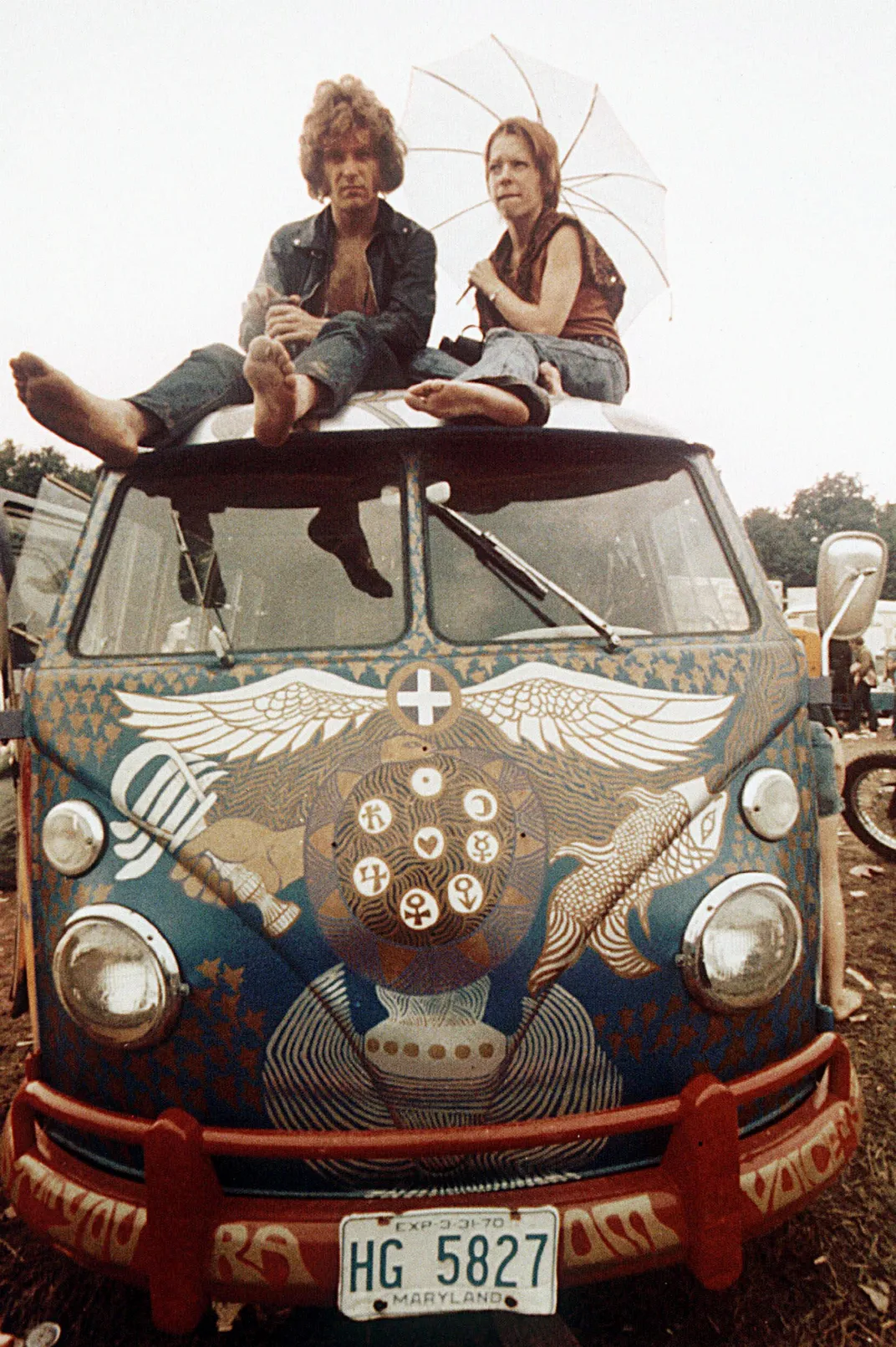
In the 1960s, both Garcia and the Microbus came to represent a growing malaise in America about the country's role every bit a nuclear superpower and its reliance on commercialism to feed a voracious appetite for more, more, more. A sure segment of society decided to "turn on, tune in and drop out," as Harvard psychologist Timothy Leary put it, by focusing on the psychedelic rock music performed past bands like the Grateful Dead and traveling effectually in Microbuses covered with depictions of peace signs and flowers.
"For many people, the VW Microbus became the symbol of protest with Detroit's overpowered cars and society in general," says Roger White, curator of route transportation history with the Division of Work and Industry at the Smithsonian's National Museum of American History. "Information technology was a fashion of thumbing their noses at the institution."
That's quite a transition for the vehicle, because its roots. Known as Blazon two, the Microbus was an offshoot of the VW Beetle, called Type i, which dates to 1933 when Adolf Hitler, the leader of Nazi Federal republic of germany, proposed a "people's car"—or Volkswagen—for the masses. Postwar, the company was looking to expand its product line past offer a vehicle that would milkshake up the automotive industry.
"This was the starting time van," White says. "Before this, people used large cars, trucks and buses to booty people and cargo effectually."
Regardless of its origins, the VW Microbus marks its 70th ceremony as both an icon and style of transportation. The get-go vehicle went into product March 8, 1950, at a Volkswagen constitute in West Germany, and inverse the manner the world looked at cars.
The Microbus blueprint was created past Ben Pon, a Dutch importer of VW Beetles. He was inspired to sketch the offset van in 1947 later on seeing a flatbed parts-hauler made from a Type I chassis while visiting the Volkswagen plant. The German machine manufacturer began tinkering with the idea and finally went into production in 1950. Two versions were initially offered: the Kombi, with side windows and removable eye and rear seats, and the Commercial, essentially the first panel van.
Volkswagen'southward marketing arroyo for the new product line was an extension of its advertising for the Beetle: promote its simple styling and usefulness as a vehicle for home, work and play. People loved the fact that the VW Microbus could send goods of all kinds—homo and otherwise. With a roomy interior, rear-wheel bulldoze and air-cooled engine, it was piece of cake to operate and maintain. In the United states, it was seen every bit a cost-effective alternative to the family station carriage.
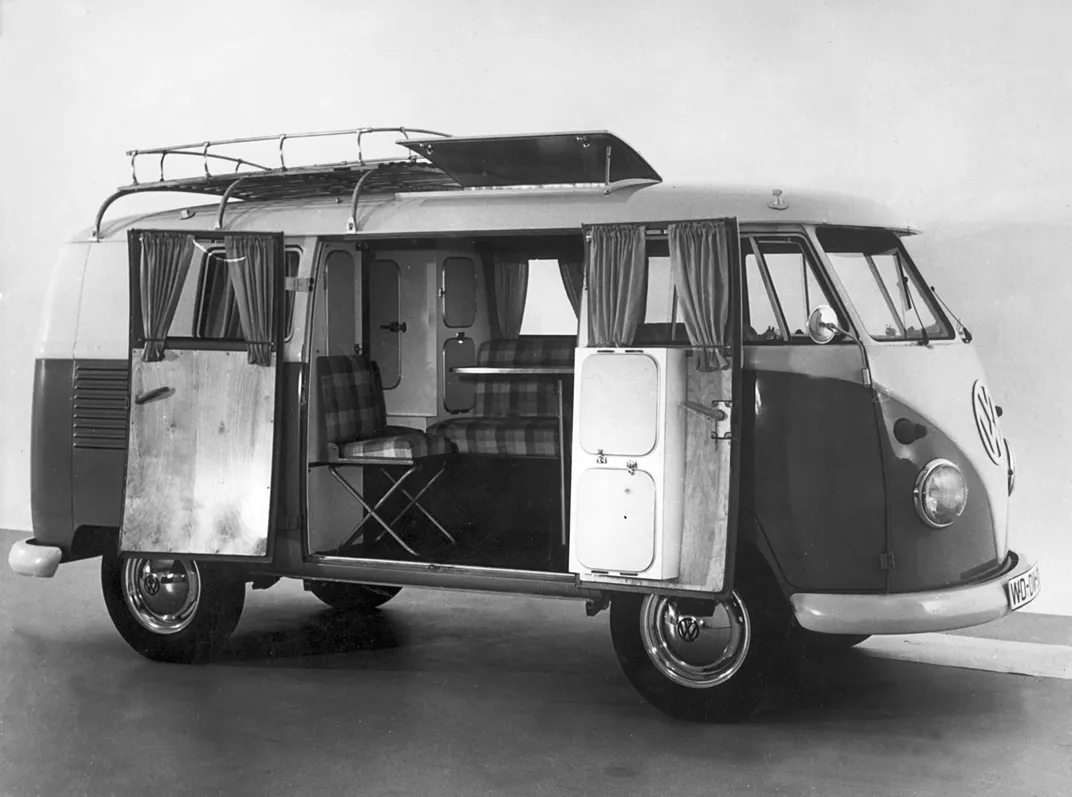
And it was fun to customize. Almost equally soon as it rolled off the assembly line, owners began adapting the Microbus to their own needs. Soon, it was being used as a camper by outdoor enthusiasts who outfitted it with beds, sinks and more. Volkswagen took annotation of this trend and contracted with Westfalia, a German visitor known for building carts and wagons, to begin making camper conversion kits. The beginning VW Westfalia campers were exported to the United States in 1956.
As the Microbus became more than accepted in America, it began to accept on a cult status with fringe groups. Its indigestible appearance—so unlike anything the major automobile manufacturers in Detroit were producing—became a symbol for counterculture types, who wanted to stand up out from the rest of crowd. Some owners painted peace signs on the Microbus, earning it the nickname "hippie bus."
"It became popular with people who were rejecting mainstream American culture," White says. "It was their style of saying, 'Nosotros don't need your big V8 cars.'"
The VW Microbus was likewise a favorite of marginalized members of society, who could use the versatile vehicle to transport people to rallies, polling stations, protests and more during the political and cultural upheaval that laced the 1960s.
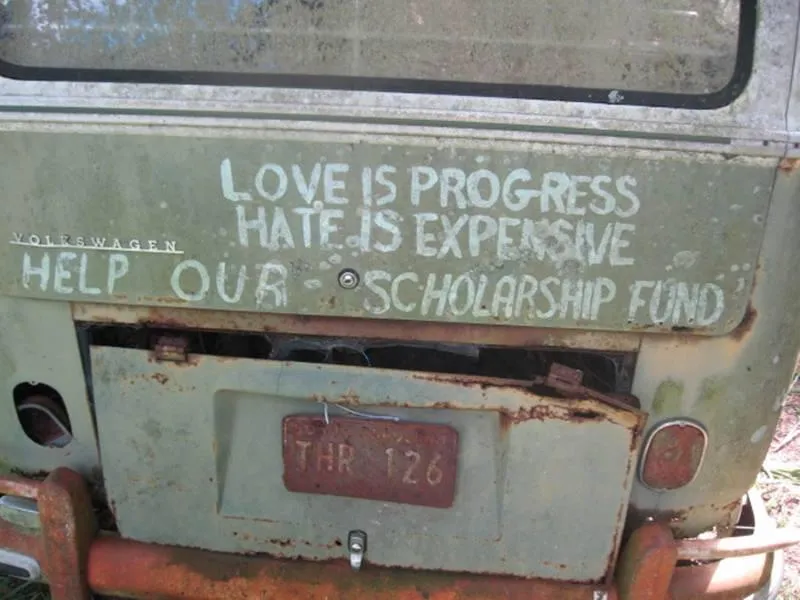
I Microbus in particular stands out today as an emblem of the racial strife that plagued much of America during the decade. It was driven around the Sea Islands near Charleston, S Carolina, by Esau and Janie Jenkins, civil rights activists who wanted to make a deviation in their community. They used this 1966 VW Transporter to have African-American children to school and adults to work in the segregated Due south.
"Esau would drive the Microbus while Janie would teach passengers about the South Carolina constitution," says William Pretzer, senior curator at the National Museum of African American History and Culture. "They wanted people to know their rights and so they could stand for themselves. They did this for years."
Two pieces of that now rusted and faded greenish Microbus are on display at the museum, which opened in 2016 on the National Mall in Washington, D.C.: a side panel and rear hatch. Still visible on the latter are the words painted by the Jenkins, "Dearest IS PROGRESS. HATE IS EXPENSIVE."
"These pieces enlarge the narrative of what was happening at that time," Pretzer says. "They assistance us all to understand the rejection of rights and citizenship that existed and then. It'southward not black history; it's American history."
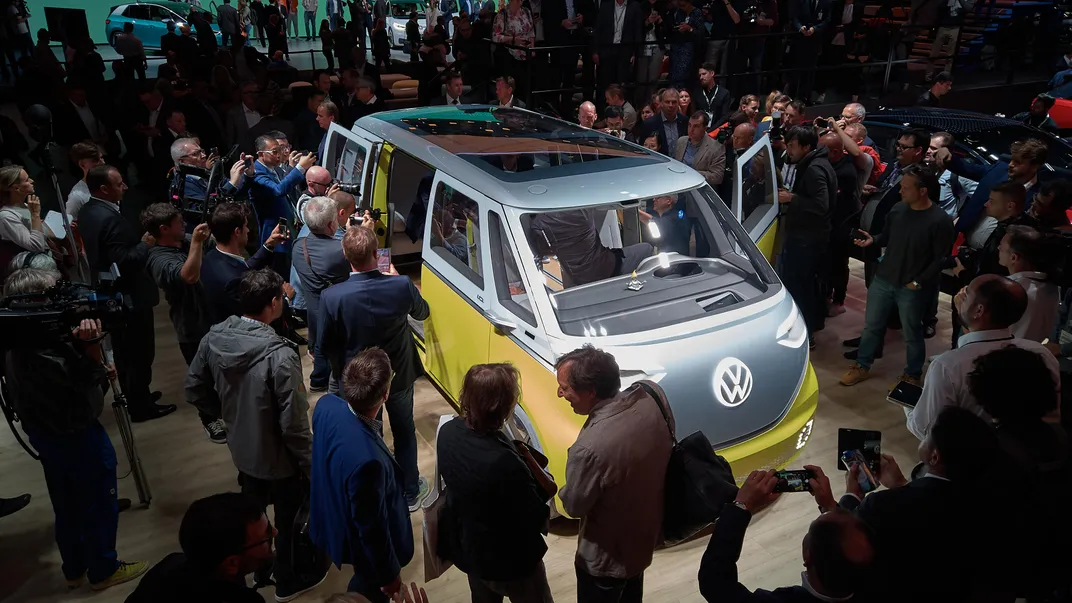
The VW Microbus persevered through a tumultuous time in America. Millions were fabricated, but eventually the social revolution subsided so did interest in the vehicle. Production ceased in 2014. However, all is not lost! This counterculture symbol is most to make a comeback in 2022—every bit an electric vehicle.
Currently known as the I.D. Buzz, the newest version of the Microbus volition evangelize 369 horsepower from electrical motors on each axle. The original Type 2 sold in the United States in 1950 had all of 30 horsepower.
However, it's a far weep from those disorderly days as a hippie van hauling long-haired young people to stone concerts. Just ask William Pretzer. He recalls such a scenario from 1971, when he and his friends tried to arrive to Oakland Coliseum to see the Rolling Stones play.
"The fan belt broke and the van filled with smoke," he recalls. "That air-cooled engine was fried."
Maybe an electric Microbus isn't a bad thought later all.
Source: https://www.smithsonianmag.com/innovation/how-volkswagen-bus-became-symbol-counterculture-180974354/
0 Response to "Cool Drawings of Flowers and Volkswagen Vans"
Post a Comment